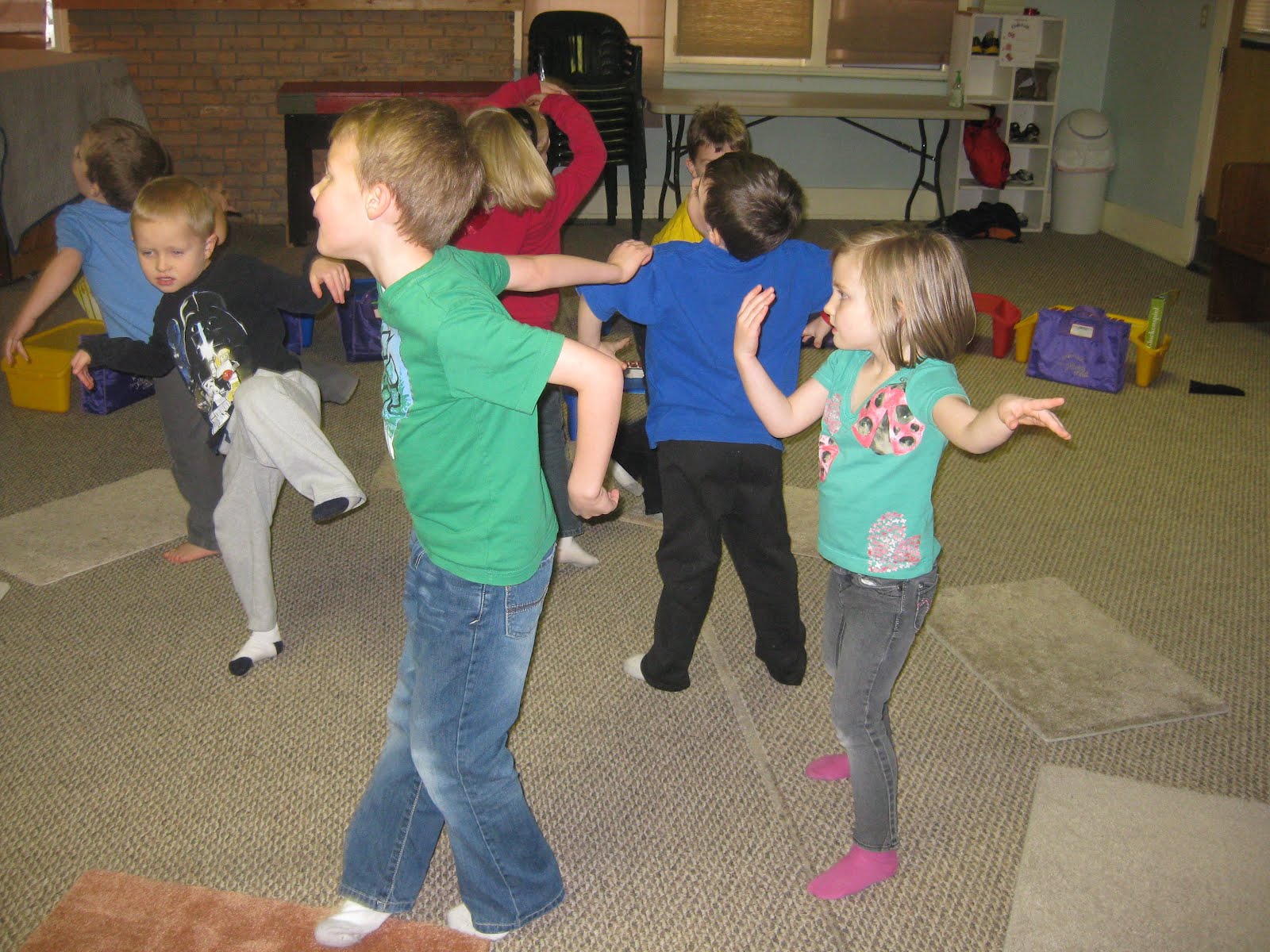
What is Kindermusik?

Kindermusik is a world-wide children's music and movement program. We use music as a tool to help prepare kids for future school success. Research shows that participation in music-making helps kids become better learners and excel in school. To learn more, visit Kindermusik International's website: www.kindermusik.com

The Gateway Foundation for Theatre and Dance

The Gateway Foundation for Theatre and Dance is a non-profit performing arts center in Pocatello, Idaho. Our mission is to help children cultivate and showcase their talents in the Performing Arts in a safe, excellent, wholesome environment. We strive to make Performing Arts training available to every child who desires it. Classes include: ballet, jazz, hip-hop, lyrical, creative, ballroom for adults and children, children's musical theatre, teen musical theatre, tumbling, cheer, voice, piano, and of course Kindermusik! See our website at www.gatewayfoundationfortheatreanddance.com

Thursday, February 9, 2012

Week 3

Our Time: Away We Go
"Children ages 1 1/2-3 learn primarily through movement. In order to learn they must manipulate objects and participate in body movement." (Rhythms of Learning by Chirs Brewer and Don G. Campbell)
This week we "manipulated" hoops to help us learn about: in, out, over, under, through, around, up, down, bouncing, rolling, jumping, hopping, twirling and many other concepts.
And of course, we had a good time practicing steady beat with our rhythm sticks!


Village: Cock-a-doodle-MOO!

This week was definitely a “high and low” workout for everyone! From reaching up high and bending to touch our toes, to the delightful “Clever Cow” finger play—walking fingers up and down our littlest ones from toe to head and back down.

Babies learn through their senses—so everything needs to be experienced in as many ways as possible. Your little one is busy trying to make sense of his world and the many concepts that are part of our everyday vocabulary. Engaging activities that combine language, music, and movement are ideal for introducing concepts such as high/low and up/down.

Babies love an energetic bounce…or two. Almost any song will work as a bouncing song, but this week’s favorite, “Hop Up, My Baby” has an extra surprise tucked in the middle—suspending baby up high. As you can see, they really loved it!
Scarf Play:

Imagine That!: Toys I Make-Trips I Take

We are surrounded by sounds, but are we listening to them?

Most people are born with the ability to hear, but listening is a learned skill. In active listening, we make a decision to pay attention and not speak or make sounds. Practicing active listening provides lifelong benefits. It’s necessary for following directions at home and at school.



Thursday, February 2, 2012

Spring 2012: Week 2

Village: Cock-a-doodle-MOO!

We had Fun today skipping, creeping, running, and of course greeting one another! I enjoyed watching the babies’ faces as they had fun singing and moving at different speeds…. or to use the musical word for speeds—tempi.

While your baby is developing an understanding of music and language, it is important that he be given many opportunities and experiences to hear and feel a wide range of speeds; from slow to moderately steady, to quick.

Enjoy sprinkling a few “fast and slow games” into your week. Sing a favorite song very slowly while dancing slowly with your baby; then sing the same song quickly and dance quickly. Alternate between the two extremes and notice the joyful realization when your baby anticipates what is next. This is a great game to play with your baby anytime and anywhere … and all you need is your voice!


Our Time: Away We Go!

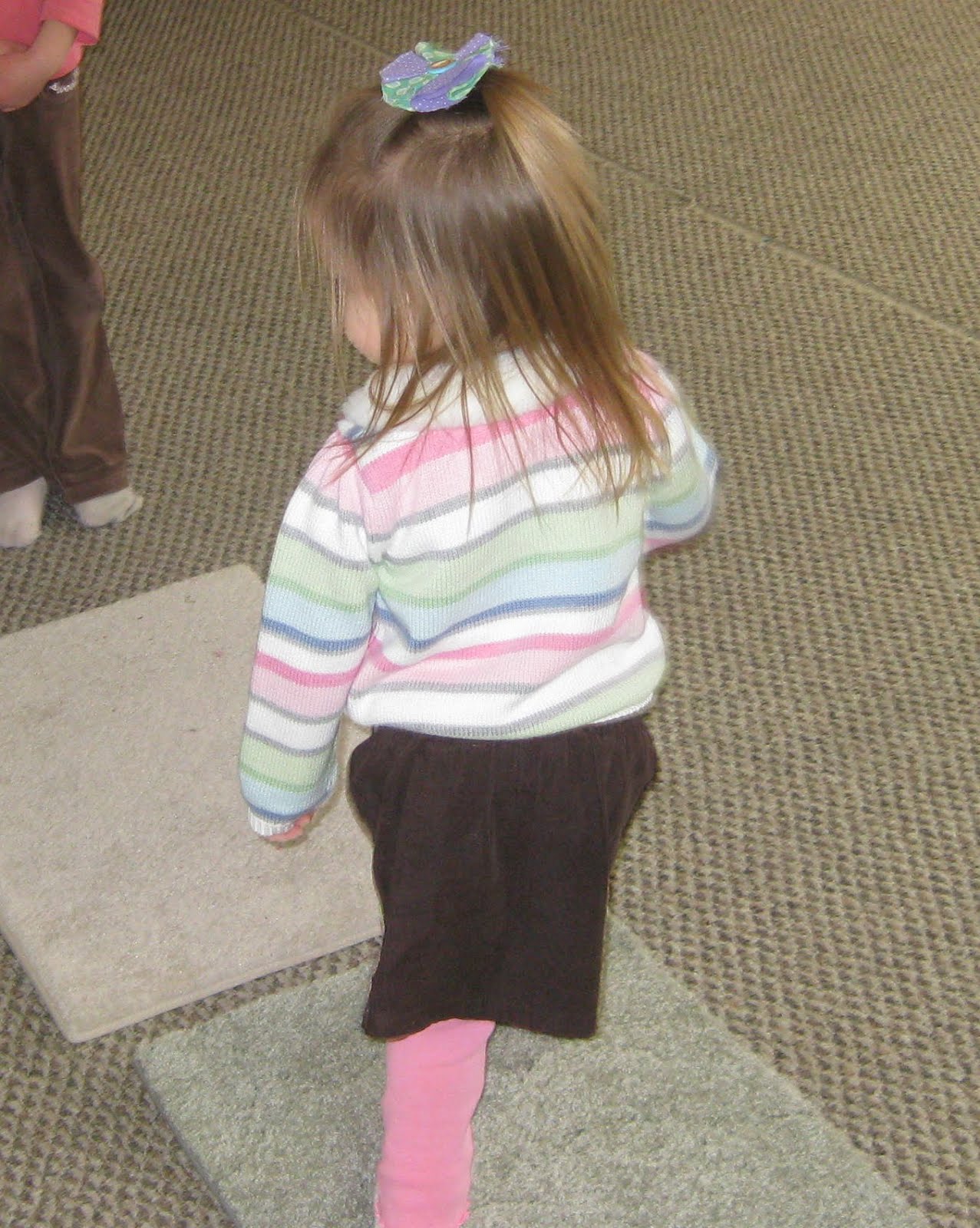
We had fun with fast and slow in our toddler class also. We practiced that concept with rhythm sticks, dancing, finger plays, and other movement games. Over the next few lessons, we’re going to repeat many of these activities. You may find yourself wondering why we’re singing the same songs, but your toddler loves the comfort of familiarity. With each repeated activity, the neural connections in your child’s mind grow stronger, helping him to think, reason, create, and express.

This week at home have some fun with the Train and Tunnel Cut-Out on pages 7-8 of your home activity book.


Imagine That!: Toys I Make, Trips I Take

Did you know that having a strong sense of steady beat helps develop so much more than musical skill? In musical play, your child is practicing and developing a sense of rhythm in the legs and feet. This lower body beat practice is good for playing sports, especially dribbling and shooting basketballs, as well as for dancing, skipping, and running. Today in class, we did a variety of activities to help us with this very important concept.

So as you listen to the sounds of your child exploring the Kindermusik drum, keep reminding yourself of all the great learning that is taking place!

Ball Play:
More than one way to play a drum!
Young Child 2

Today’s class was full of fun and games—literally—with lots of learning mixed in! The children loved the Musical Baseball game. When each child came up to “bat,” he or she listened to me play a simple c”-a’ melody on the glockenspiel and then had three chances to repeat it. Little did they know that they were honing their auditory discrimination skills while playing the game!

An important concept explored today was the concept of dynamics—the term which refers to how loud or quiet music is. Several activities dealt with identifying loud (forte) and quiet (piano) sounds. Music at Home 17 offers some creative ways to explore dynamics with the glockenspiel and objects you can find at home.

Different ways to practice forte and piano:
Forte outside the circle:
Piano inside the circle:
Just for kicks!
Lucy Locket:

Young Child 4

We learned the note a’ on our recorders! And not only did they learn to play the a’, it was incorporated into a special story they are learning to tell with music accompaniment. This story, Momotarosan, is a Japanese folk tale about a brave and generous little boy. (Ask your child to tell you about it!) Through the telling of the story with instruments, your child learns to watch a conductor (me), listen for a cue, play in an ensemble, and focus her attention on one activity for several minutes.

Music at Home 47 serves as a practice card for playing a’ on the recorder and also the Momotarosan recorder melody. Be sure to use this helpful tool at home this week!


Thursday, January 26, 2012

Spring 2012: Week 1

Hello families!

I was having so much fun playing this first week of the semester, that I basically forgot to take pictures of what was going on in class! But I still want to share an important principle of learning (in Kindermusik we call these Foundations of Learning, or FOL).

This week's FOL is one that is important for all Kindermusik age kids, but I've paraphrased from the Imagine That! family activity book.
The Benefits of Play: Play is an enjoyable, voluntary process. Play and learning have a complex relationship, where the things that are being learned are practiced and developed during play. Play is where concepts are reinforced and explored, and competence is acquired. "Children practice what they learn, and when they are more skilled they try to vary the play." (Guiding Childrern's Social Development, by Kostelnik Stein and Whiren Soderman)

So have fun playing with your children this week! Maybe they can teach you something they learned in Kindermusik class! Have fun!

Friday, January 20, 2012

Last week of Fall semester!

Hello Parents,

I forgot to take my camera to classes this week, so I don't have any new pics for you. I did, however, still want to leave a little message. I have really enjoyed spending time with your children this semester! They are so dang cute! I look forward to working with you again in the spring while you help your children develop the skills they need for school and for life. Music is a great tool to make that happen! I also want to share a quote from the website: www.zerotothree.org.

"A child needs the freedom to move. It is important to allow him plenty of opportunities for movement in a safely arranged space where he can practice using the muscles in his body. This allows him to explore his surroundings, refine his coordination, release some of the energy that keeps him on the go, and develop new skills."

These are just some of the things we do in a Kindermusik class. It is my goal for the semester ahead, to share more benefits with you each week. I also encourage you to use your At-Home Materials even more this semester. There is such value in the kit, but it has to be used to experience that value! So have fun playing together and I will see you all next week!

Wednesday, January 4, 2012

Dec. 2011

I hope everyone had a Merry Christmas, a Happy New Year and a fun vacation! I sure did and I'm ready to get back to Kindermusik! I hope you all enjoy classes as much as I do. I am so thankful to be able to have these experiences with you and your children. I love that music can do so much to help our children develop. And it's so fun too!

Here are some pictures of December highlights!


Flying like the birds!
Even birds have to check themselves out in the mirror!

Practicing being able to hear high and low.
Writing some music on our staff charts.
Learning about Native American music.
I can do so many things, all by myself!

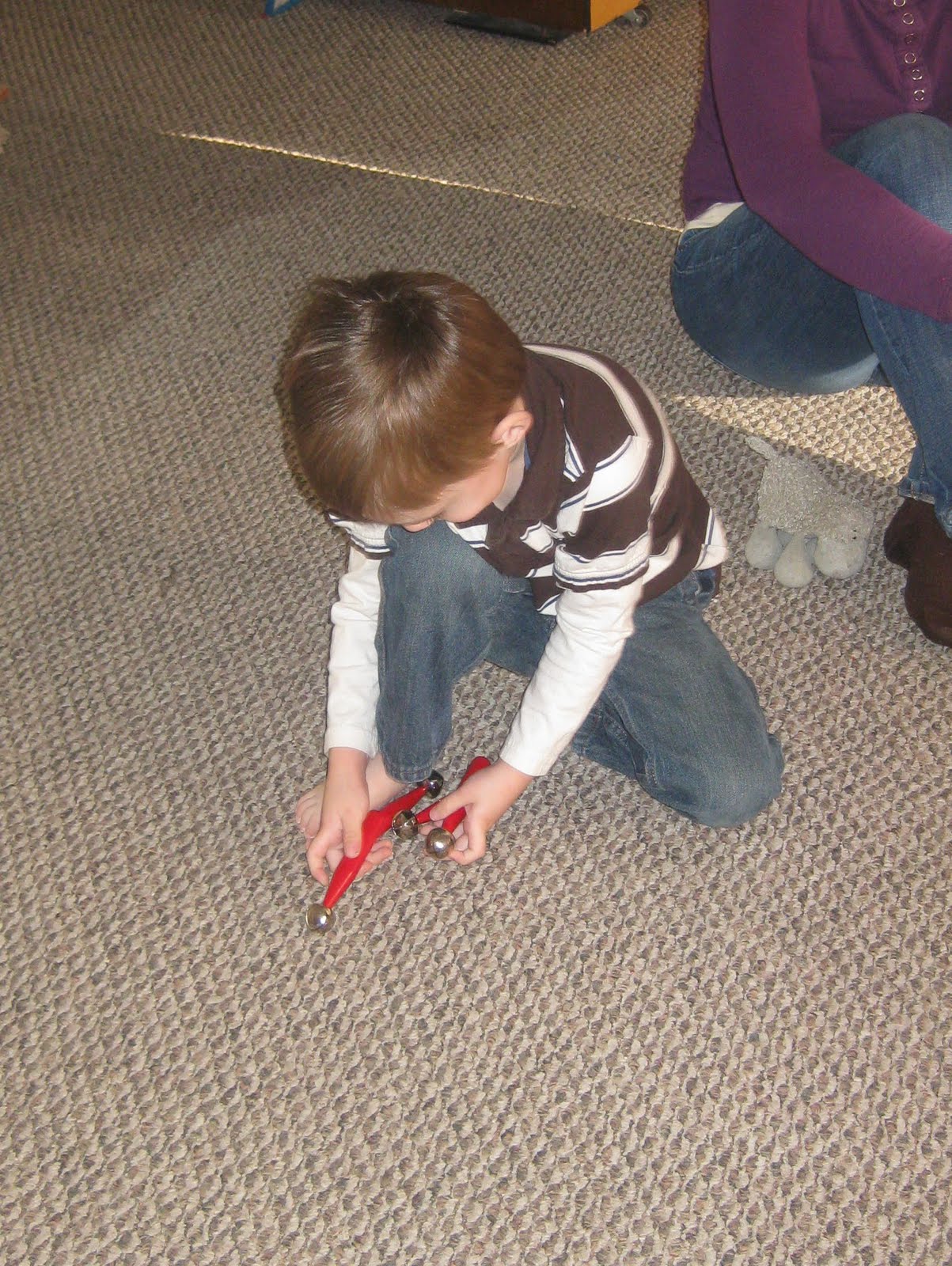
Playing the one-bell jingles takes so much concentration and fine motor skills!


Birdies asleep in the nest!

Awake!!

More high and low:


Trying out our steady beat skills on metal instruments.


We love rocking time!

Yay! We finally got our glockenspiels!